
FUE Hair Transplants are often marketed as the “gold standard” of hair restoration—but many clinics hide the critical truths about this procedure. From follicular unit extraction risks to unrealistic result expectations, we’re breaking down the unspoken details you need to know before choosing FUE.
Unlike traditional hair transplant methods, FUE relies on individual follicle extraction—but this precision comes with unique challenges that even the best hair transplant surgeons may not disclose upfront.
In an era dominated by glossy advertisements and exaggerated claims, hair restoration procedures like Follicular Unit Extraction (FUE) have become a booming industry. While FUE offers transformative results when performed correctly, many clinics prioritize profits over patient education, masking risks and oversimplifying complexities.
This article dismantles common myths, reveals critical truths, and equips readers with evidence-based insights to make informed decisions.
1. Beware of Marketing Gimmicks: Old Techniques in New Packaging
The hair transplant industry thrives on buzzwords like 3D hair transplant, no-shave transplant, or laser-assisted FUE. These terms often repackage decades-old methods with minimal innovation. For instance:
- 3D hair transplant: Typically refers to computer-aided planning or angled graft placement, which are standard practices in modern FUE. No “3D” technology fundamentally alters the core process of extracting and implanting follicles.
- No-shave transplant: While partial or selective shaving techniques exist (e.g., extracting grafts between longer hairs), full no-shave procedures risk damaging follicles during extraction and implantation. Most reputable clinics still recommend shaving the donor area for precision, as unshaven hair can obscure the surgeon’s view and increase transection rates.
- Sapphire FUE: This variant uses a sapphire-tipped punch for incisions, claiming smoother healing and better graft alignment. While sapphire blades reduce trauma compared to steel tools, the technique remains an extension of traditional FUE, not a revolutionary breakthrough.
The core principle remains unchanged: healthy follicles are harvested from the donor area (typically the back of the head) and transplanted to thinning regions. Clinics that overhype “cutting-edge” terms often divert attention from the surgeon’s skill—the true determinant of success.
2. FUE: The Gold Standard in Hair Restoration
FUE has emerged as the internationally recognized method for its minimally invasive nature and superior outcomes:
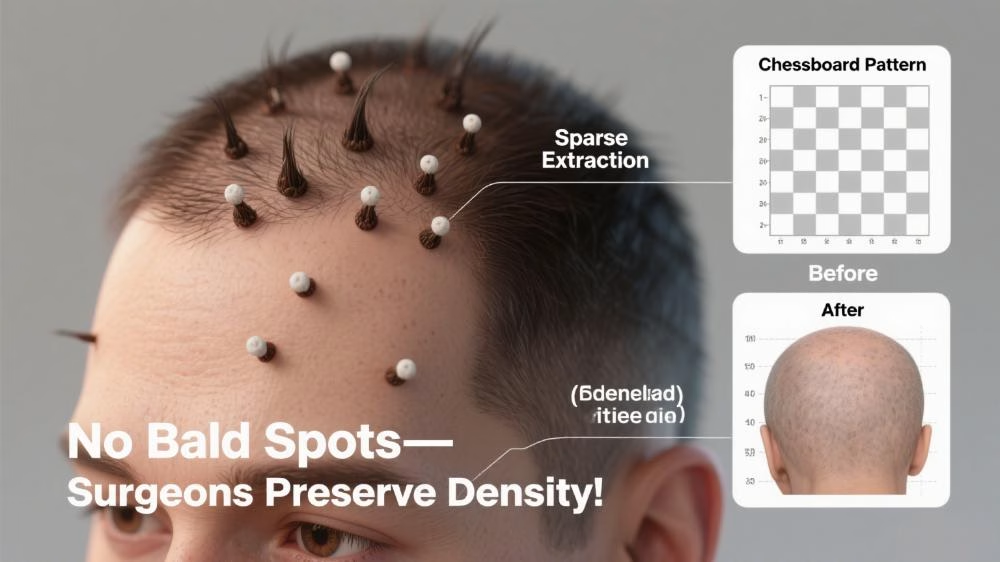
- Technique: Individual follicular units (containing 1–4 hairs) are extracted using a tiny punch (0.6–1mm diameter) from the donor scalp. Unlike Follicular Unit Transplantation (FUT), which involves removing a strip of skin, FUE leaves minimal dot-like scars that blend seamlessly with hair growth.
- Advantages:
- Scarring: FUE scars are nearly invisible, even with short haircuts, whereas FUT leaves a linear scar requiring long hair to conceal.
- Recovery: Patients typically return to work within 3–5 days, with swelling and discomfort subsiding within a week. FUT, by contrast, involves a 10–14-day recovery period and higherpost-operative pain.
- Precision: FUE allows surgeons to tailor graft placement to mimic natural hair growth patterns, crucial for achieving a realistic hairline.
While FUE is generally safe, its success hinges on meticulous execution. Poorly performed FUE can lead to uneven density, scarring, or even permanent damage to the donor area—a risk clinics rarely disclose.
3. Surgeon Skill: The Unspoken Determinant of Success
Marketing campaigns often highlight technology or facilities, but the surgeon’s expertise is non-negotiable. Key factors include:
- Extraction: Skilled surgeons use motorized punches with precise depth control to minimize follicle transection (cutting). Inexperienced hands may damage up to 20% of grafts during extraction, compromising survival rates.
- Separation: Follicles must be isolated under magnification to remove excess tissue without harming the bulb. Improper handling can disrupt blood supply, reducing viability.
- Implantation: Grafts must be inserted at the correct angle, depth, and density to match the patient’s natural hair growth. Misalignment results in unnatural tufts or “doll’s hair” appearance.
Credentials matter: Look for surgeons certified by the American Board of Hair Restoration Surgery (ABHRS), the gold standard for expertise. ABHRS diplomates undergo rigorous exams, including oral case reviews and written assessments of hair biology, ethics, and complication management. Avoid clinics where technicians perform critical steps, as outcomes depend on the surgeon’s direct involvement.
4. Permanent Hair Loss Risks: The Cost of Negligence
Hair follicles are non-renewable resources. Improper extraction or implantation can permanently damage them, leading to:
- Transection: Cutting through follicles during extraction renders them useless. Even minor trauma can disrupt stem cell activity, preventing regrowth.
- Over-harvesting: Aggressive extraction depletes the donor area, leaving visible thinning or scarring. Patients may require revision surgeries or be left with limited options for future treatments.
- Infection or Poor Healing: Inadequate sterilization or post-operative care can cause infections, leading to graft loss or scarring that complicates future procedures.
Key warning: Clinics claiming “unlimited grafts” or “100% survival rates” are likely misleading patients. Reputable surgeons assess donor density and health before recommending procedures, ensuring long-term sustainability.

5. Choosing Clinics Wisely: Beyond Flashy Ads
Selecting a clinic requires skepticism and due diligence:
5.1 Verify Surgeon Credentials:
- Prioritize ABHRS-certified surgeons or members of the International Society of Hair Restoration Surgery (ISHRS).
- Avoid clinics where sales staff outnumber medical professionals or pressure you into quick decisions.
5.2 Assess Transparency:
- Request to see before-and-after photos of actual patients, focusing on both recipient and donor areas. Poor clinics often hide donor scarring or uneven growth.
- Inquire about the clinic’s graft survival protocol. Reputable practices use trichoscopy (microscopic scalp analysis) to monitor growth and address issues promptly.
5.3 Beware of Guarantees:
- A “money-back guarantee” may indicate low confidence in results. Legitimate clinics offer warranties tied to objective outcomes (e.g., minimum graft survival rates).
5.4 Ask About Tools and Techniques:
- Confirm the use of 0.6–0.8mm punches for extraction, as larger diameters increase scarring.
- Inquire about graft storage solutions (e.g., hypothermic preservation) to maintain viability during transplantation.
6. Achieving Natural, Long-Lasting Results
With proper technique and care, FUE can deliver transformative, lifelong outcomes:
- Natural Appearance: Skilled surgeons mimic the patient’s native hairline curvature, density, and growth direction. Single-hair grafts are strategically placed at the hairline for softness, while multi-hair grafts add volume to thinning crowns.
- Permanent Growth: Transplanted follicles are genetically resistant to DHT (the hormone causing male pattern baldness), ensuring they grow indefinitely. However, untreated native hair may continue thinning, necessitating ongoing management (e.g., minoxidil, finasteride).
- Post-Operative Care:
- Immediate: Avoid touching the grafts, sleep with your head elevated, and follow antibiotic protocols to prevent infection.
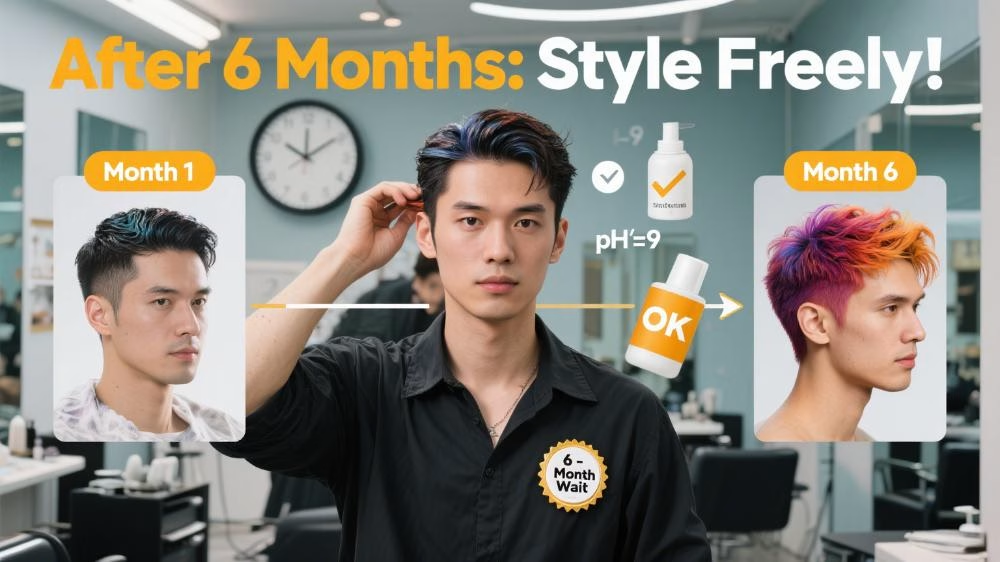
- Long-Term: Gentle washing, sun protection, and avoiding harsh styling products preserve graft health. Wait 3–6 months before coloring or perming transplanted hair.
Patience is key: Initial shedding (shock loss) is normal, with visible growth emerging at 3–4 months and full results by 12 months. Manage expectations by consulting realistic timelines and case studies.
Conclusion
FUE hair transplants offer life-changing results when executed with skill and integrity. However, the industry’s profit-driven culture often obscures critical truths—from rebranded techniques to the irreversible consequences of negligence. By prioritizing surgeon expertise, demanding transparency, and understanding the science behind the procedure, you can navigate this landscape with confidence.
Remember: true excellence in hair restoration lies not in marketing claims, but in the hands of a skilled, ethical professional.
For international patients considering FUE Hair Transplants in China, understanding these truths is the first step to a successful procedure. Our team at MedChinaGuide connects you with the best hair transplant surgeons and reputable clinics, ensuring you avoid common risks and achieve natural results.