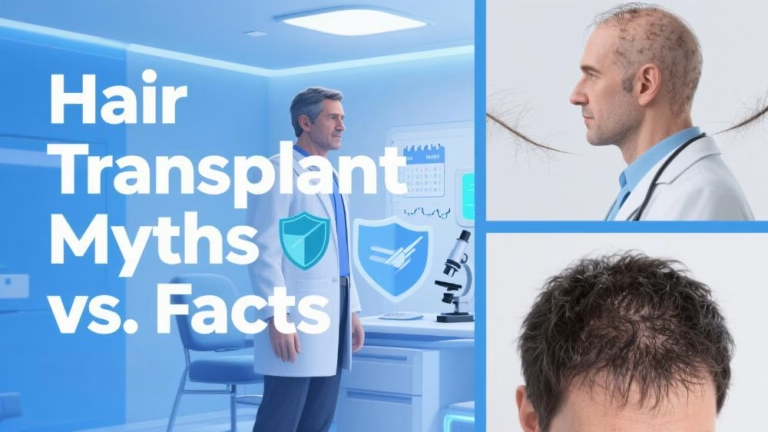
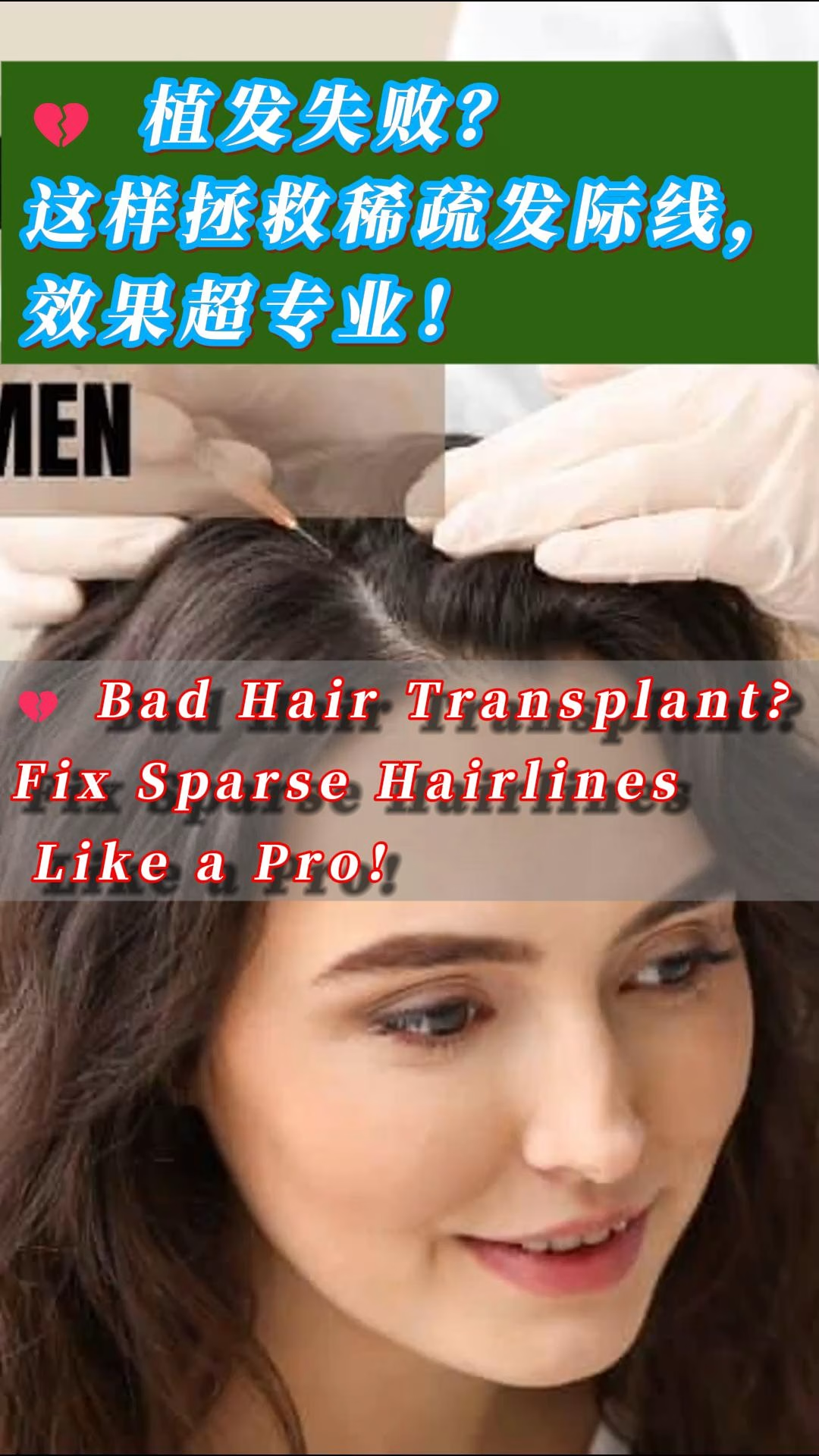
A bad hair transplant can leave you with a sparse, unnatural hairline—but it doesn’t have to be permanent. With the right repair techniques and expert guidance, you can restore a natural, confident look.
Are you tired of feeling self – conscious about your thinning hairline or patchy scalp? You’re not alone. Hair loss affects millions, but a poorly executed hair transplant can leave you looking worse than before. In this guide, we’ll break down common issues, risks to avoid, and expert tips to achieve natural, confidence – boosting results.
1. Common Hairline & Scalp Issues
Problems:
- Wide Part: Excessively visible scalp in the center, making hair appear sparse.
- Receding/Sparse Hairline: Hairline retreats or lacks density, often exposing more forehead.
- Large Forehead: Creates an unbalanced facial appearance, emphasizing age or thinning.
Effects:
These issues can make hair look thin, greasy, malnourished, or prematurely aged. A receding hairline, for example, may draw attention to your forehead, altering your overall facial harmony. Even celebrities aren’t immune—many opt for hair transplants + straightening to restore youthfulness and subtly reshape their features.
Why It Happens:
Hair loss can stem from genetics (androgenetic alopecia), hormonal changes, stress, or medical conditions. Over time, hair follicles miniaturize, producing finer, shorter strands until they stop growing entirely.

2. Risks of Poor Hair Transplants
When addressing a bad hair transplant, the first step is to consult a specialist experienced in hairline restoration and repair.
Dr. Zhang, a leading expert in hair restoration, highlights 4 critical mistakes that turn dream transformations into nightmares:
1. Overly Rigid Hairline
- Issue: A perfectly straight or overly curved hairline that looks unnatural, resembling a wig.
- Why It’s Bad: Humans have asymmetrical hairlines with subtle irregularities. A rigid design ignores this, creating an artificial look.
2. Mismatched Proportions
- Issue: A hairline that doesn’t align with facial structure (e.g., too low for a round face or too high for a long face).
- Why It’s Bad: Proportions matter. A poorly designed hairline can make your face appear distorted or unbalanced.
3. Unrealistic Texture
- Issue: Transplanted hair with inconsistent texture (e.g., straight hair grafted into naturally curly areas) or unnatural growth angles.
- Why It’s Bad: Hair grows in specific directions and patterns. Forcing a mismatch (e.g., straightening curly hair post – transplant) can lead to an unnatural, “doll – like” appearance.
4. Patchy Density
- Issue: Uneven distribution of grafts, with areas of dense hair next to bald spots.
- Why It’s Bad: Poorly placed or damaged grafts fail to survive, leaving visible gaps. This often happens when surgeons rush or lack precision.
3. Critical Success Factors
Precision & Teamwork
A skilled surgeon and a trained team are non – negotiable for natural results:
- Surgeon Expertise:
- FUE vs. FUT: Modern FUE (Follicular Unit Extraction) uses tiny punches to harvest individual hair follicles, minimizing scarring and allowing precise placement.
- Custom Design: A good surgeon analyzes your face shape, hair texture, and growth patterns to create a personalized hairline. For example, a heart – shaped face may suit a soft, rounded hairline, while an oval face can handle a more angular design.
- Team Coordination:
Nurses and technicians play a vital role in preserving graft viability during extraction and implantation. Delays or mishandling can damage follicles, reducing survival rates.
Doctor Selection Matters
- Red Flags:
- Low Prices: Quality transplants require advanced tools, skilled staff, and time. Be wary of “discount” clinics.
- No Portfolio: Reputable surgeons proudly show before / after photos.
- Solo Practitioners: Complex procedures need a team. Avoid clinics where one doctor handles everything.
- What to Ask:
- Experience: How many transplants has the doctor performed? Look for specialists with 5 + years in FUE.
- Credentials: Are they board – certified in plastic surgery or dermatology?
- Post – Care Plan: What’s their protocol for infection prevention, scar management, and follow – up appointments?
4. The Road to Recovery: Post – Transplant Care
Even the best surgery can fail without proper aftercare:
- Days 1–3:
- Keep the scalp dry and avoid touching the grafts. Use a gentle, fragrance – free shampoo as instructed.
- Sleep with your head elevated to reduce swelling.
- Weeks 1–4:
- Avoid strenuous exercise, sunlight, and tight hats.
- Follow medication schedules (antibiotics, anti – inflammatories) to prevent infection.
- Months 1–6:
- New hair may shed initially (normal!). Regrowth typically begins at 3–4 months, with full results visible by 12 months.
- Apply recommended topical treatments (e.g., minoxidil) to stimulate growth.
5. Realistic Expectations
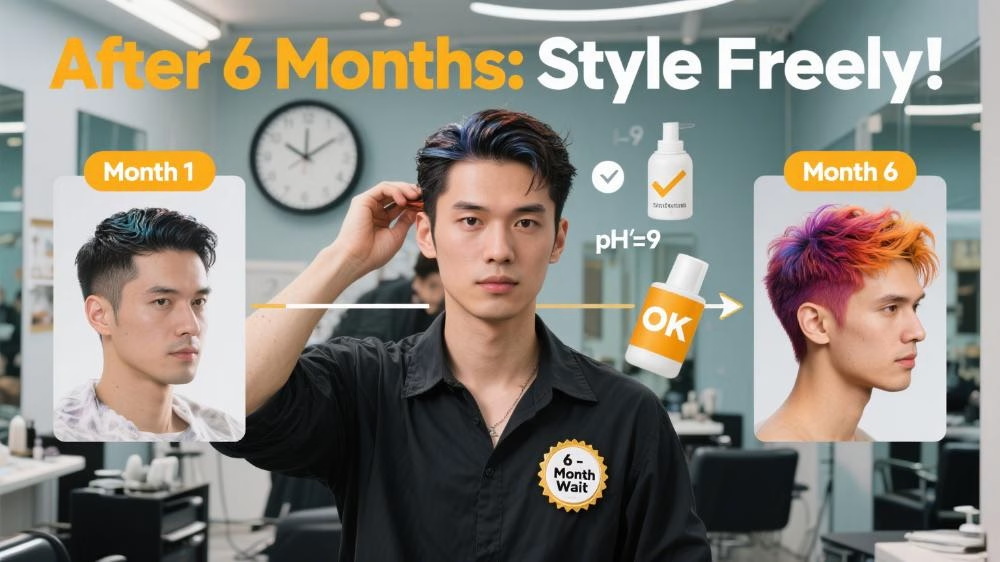
- Timeline: Results aren’t instant. Be patient—hair grows about 0.5 inches monthly, so allow a full year for final outcomes.
- Naturalness: The goal is subtlety. A successful transplant should make people think, “Wow, their hair looks great!” —not, “Did they get a transplant?”
- Limits: Transplants can’t change your hair’s texture (e.g., curly to straight). For styling changes, consider keratin treatments or heat styling after full recovery.
Final Thoughts
A hair transplant is a powerful tool for restoring confidence—but it’s not a DIY project. Avoid shortcuts, prioritize expertise, and partner with a team that values precision and natural aesthetics. With the right approach, you’ll bid farewell to “wig – like” disasters and hello to a hairline that looks effortlessly you.
Ready to take the next step? Consult a board – certified specialist who combines artistry with science. Your dream hairline awaits! 🌟
Key Takeaways:
- Avoid Rigidity: A natural hairline has soft, irregular edges.
- Trust the Team: Surgeons, nurses, and technicians work together for optimal results.
- Patience Pays: Recovery takes time, but the transformation is worth it.
Let’s make your hair goals a reality—no compromises! 💪
By choosing a reputable clinic and following proven repair strategies, you can turn a bad hair transplant into a successful, natural-looking result.