
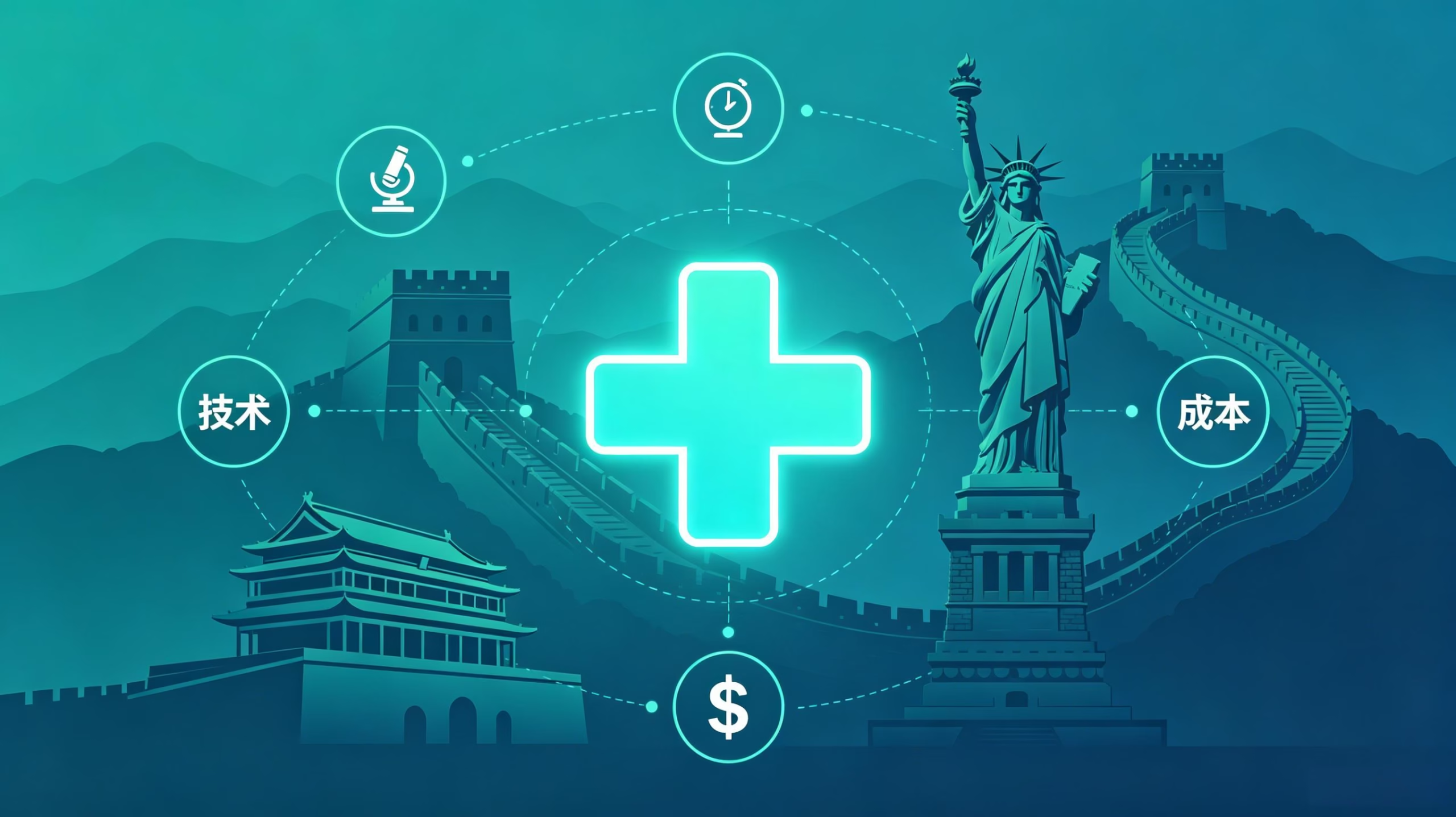
If you’re considering cross-border medical care, start with two data points:
- A total knee replacement in China costs just one-third of the U.S. price.
- A full course of CAR-T cell immunotherapy in China runs less than half the U.S. cost.
This isn’t wishful thinking — it’s the reality unfolding in the global healthcare market. As China’s medical technology rapidly aligns with international standards, its reputation for high value-for-money is attracting a growing number of international patients. This article uses real data to take an in-depth look at the cost gap between China and the U.S. across major medical categories in 2026, unpacks the logic behind China’s healthcare affordability, and provides a practical cross-border medical travel guide.
Part 1: Core Data Comparison — How Much Can You Save?
The figures below compare U.S.-dollar prices at Chinese public hospital international departments and premium private hospitals against out-of-pocket costs for uninsured patients in the United States. All prices are 2026 market reference rates.
Quick Cost Overview: Six High-Demand Categories
- Oncology: CAR-T cell therapy — China $139,000–$278,000 vs. U.S. $400,000–$500,000 (save 45%–72%)
- Proton/Heavy-Ion Therapy: China $28,000–$56,000 vs. U.S. $150,000–$250,000 (save 75%–87%)
- Coronary Artery Bypass Graft (CABG): China $21,000–$35,000 vs. U.S. $75,000–$200,000 (save 65%–81%)
- Total Hip Replacement: China $14,000–$21,000 vs. U.S. $30,000–$50,000 (save 60%–75%)
- All-on-4 Full-Arch Implants (single arch): China $7,000–$17,000 vs. U.S. $20,000–$30,000 (save 55%–75%)
- IVF (single cycle): China $7,000–$14,000 vs. U.S. $15,000–$30,000 (save 55%–67%)
Important Note: The costs above generally include the core surgery or procedure, diagnostic workups, basic medications, and inpatient care — but exclude international flights, extended accommodation in China, and non-medical expenses. Even after factoring in total travel costs, the all-in expense for major treatments in China still falls well below comparable care in the West.
Detailed China vs. U.S. Medical Cost Comparison Table (2026 Edition)
| Medical Category | Procedure | China Standard Dept (RMB) | China International Dept (USD) | U.S. Cost (USD) | Savings |
|---|---|---|---|---|---|
| Neurology / Rehab | Cerebral Palsy Comprehensive Rehab (3 months) | ¥10,000–¥30,000 | $4,200–$11,100 | $15,000–$30,000 | 60%–85% |
| Neurology / Rehab | Autism Spectrum Disorder Rehab (1 month) | ¥8,000–¥20,000 | $2,800–$6,900 | $10,000–$25,000 | 70%–89% |
| Neurology / Rehab | Pediatric Neurological Injury Rehab (1 month) | ¥10,000–¥30,000 | $4,200–$8,300 | $15,000–$40,000 | 70%–89% |
| Oncology | Neuroblastoma Immunotherapy | ¥150,000–¥400,000 | $41,700–$111,100 | $150,000–$300,000 | 70%–86% |
| Oncology | CAR-T Cell Therapy (Hematologic Cancers) | ¥400,000–¥800,000 | $138,900–$277,800 | $400,000–$500,000 | 45%–72% |
| Oncology | Proton/Heavy-Ion Therapy (Full Course) | ¥150,000–¥300,000 | $27,800–$55,600 | $150,000–$250,000 | 75%–87% |
| Oncology | Laryngeal Cancer Surgery + Chemoradiation | ¥100,000–¥300,000 | $41,700–$111,100 | $150,000–$400,000 | 70%–87% |
| Hematology | CLL Leukemia MRD Flow Cytometry | ¥8,000–¥15,000 | $2,800–$4,200 | $3,000–$8,000 | 10%–65% |
| Cardiology | Coronary Artery Bypass Graft (CABG) | ¥80,000–¥150,000 | $20,800–$34,700 | $75,000–$200,000 | 65%–81% |
| Cardiology | Heart Valve Replacement | ¥100,000–¥250,000 | $20,800–$48,600 | $80,000–$250,000 | 70%–86% |
| Orthopedics | Unilateral Total Knee Replacement | ¥50,000–¥80,000 | $16,700–$25,000 | $35,000–$60,000 | 60%–70% |
| Orthopedics | Unilateral Total Hip Replacement | ¥60,000–¥100,000 | $13,900–$20,800 | $30,000–$50,000 | 60%–75% |
| Orthopedics | Knee Dislocation Correction & Reconstruction | ¥30,000–¥60,000 | $11,100–$22,200 | $40,000–$80,000 | 70%–86% |
| Dentistry | Single Dental Implant (premium brand, incl. crown) | ¥8,000–¥18,000 | $2,800–$5,600 | $3,000–$6,000 | 10%–55% |
| Dentistry | All-on-4 Full-Arch Implants (single arch) | ¥50,000–¥120,000 | $6,900–$16,700 | $20,000–$30,000 | 55%–75% |
| Dentistry | Full Mouth Reconstruction (complex case) | ¥100,000–¥300,000 | $22,200–$55,600 | $50,000–$150,000 | 55%–70% |
| Reproductive Medicine | IVF (single cycle, incl. medications) | ¥50,000–¥100,000 | $6,900–$13,900 | $15,000–$30,000 | 55%–67% |
| Reproductive Medicine | PGT Genetic Screening (per cycle) | ¥30,000–¥60,000 | $5,600–$11,100 | $10,000–$20,000 | 45%–60% |
| TCM / Wellness | One-Week TCM Therapy Package | ¥5,000–¥15,000 | $700–$2,100 | $3,000–$10,000 | 75%–93% |
| TCM / Wellness | Post-Stroke TCM Rehabilitation (1 month) | ¥20,000–¥50,000 | $2,800–$6,900 | $10,000–$25,000 | 70%–86% |
Part 2: Where Does the Price Advantage Come From? It’s Not Just “Cheap” — It’s a Systemic Difference
The vast cost gap between China and the U.S. is rooted in two fundamentally different healthcare systems — not in any difference in clinical quality.
China’s “Universally Accessible & Controlled” Model
Medical pricing in China is subject to deep regulatory oversight at the national level. Through policies like the centralized bulk procurement program for drugs and medical devices, the prices of cardiac stents, joint implants, dental implants, and even cancer medications have been sharply compressed. At the same time, China has a large, well-trained medical workforce, keeping labor and hospital operating costs relatively low. This allows China to maintain cutting-edge medical technology — such as da Vinci robotic surgery systems and proton therapy facilities — while keeping prices accessible to all.
America’s “Market-Driven” Model
The U.S. healthcare system is highly market-driven, with prices shaped by a complex interplay among insurance companies, hospitals, and pharmaceutical firms. This has produced the world’s highest physician salaries, enormous hospital administrative costs, and unregulated prices for drugs and medical supplies. For international patients without domestic insurance, the full brunt of these compounding markups falls directly on them.
Simply put: In China, you’re paying primarily for the actual medical care and expertise. In the U.S., your bill also includes steep premiums for system overhead and market-driven pricing.
Part 3: Making the Choice — Standard Department vs. International Department / Private Hospital
For international patients, Chinese medical institutions generally offer two pathways, suited to different budgets and service expectations:
| Consideration | Public Hospital Standard Department | International Medical Department / Premium Private Hospital |
|---|---|---|
| Core Advantage | Maximum value for money — government-regulated pricing equivalent to what Chinese nationals pay. | Seamless international experience, full-service foreign-language support, efficient and private. |
| Cost Level | Lowest prices — roughly 1/2 to 1/3 of the international department rate. | Market-based pricing — still significantly below Western rates, typically 30%–50% of U.S. costs. |
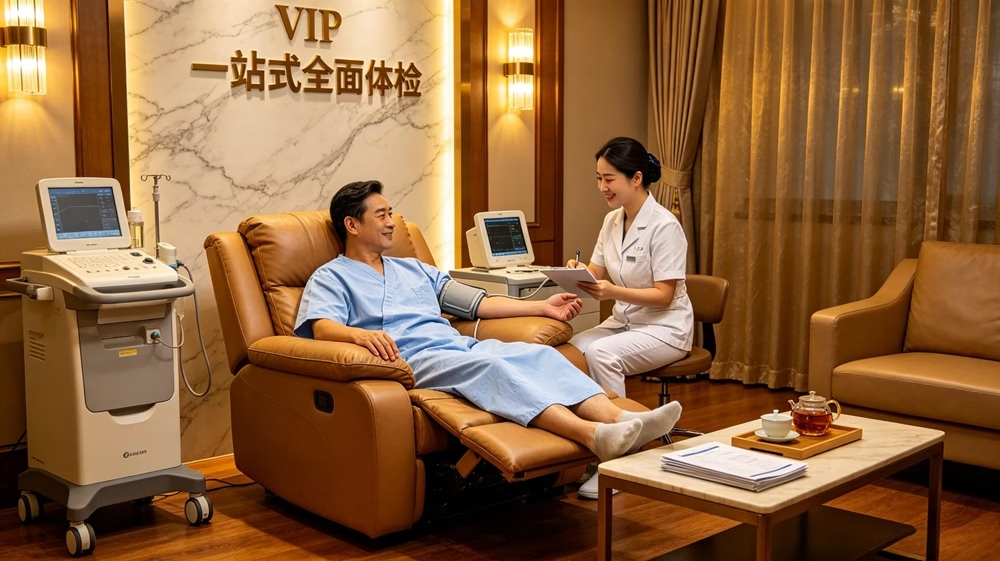
| Service & Environment | Must adapt to high patient volumes, shared waiting areas, and multi-bed wards typical of local hospitals. Basic translation may need to be arranged in advance. | Private consultation rooms, single-occupancy wards, dedicated multilingual staff from consultation through recovery. High level of privacy. |
| Best For | Long-term China residents, patients fluent in Chinese or accompanied by a reliable interpreter, and those with very tight budgets. | Most short-stay medical tourists — those prioritizing convenience, efficiency, and a comfortable experience. |
Our Recommendation: For the vast majority of international patients, the international department of a public hospital offers the best balance of value and experience. You receive the same treatment from the same top specialists as domestic patients — at a fraction of Western prices — while avoiding significant cultural and communication barriers.
Part 4: A Closer Look at Key Categories — It’s More Than Just Savings
Precision Oncology: Speed + Breadth
China’s advantage here lies in speed and breadth of access. Take the Shanghai Proton and Heavy Ion Center: its equipment and treatment protocols are on par with leading Western institutions, yet the costs are dramatically lower and appointment wait times are shorter. In cutting-edge cell therapies like CAR-T, China has a rich portfolio of approved products, offering hematologic cancer patients a far wider range of accessible treatment options.
Complex Surgery & Joint Replacement: Volume + Experience
In orthopedics, cardiac surgery, and similar specialties, China’s top hospitals perform extraordinarily high annual case volumes, giving surgeons exceptional depth of experience. In joint replacement, for instance, China’s centralized procurement policy gives hospitals an absolute cost advantage on implant materials — even when using the same imported prosthetics — and procedures can typically be scheduled within one week.
Dentistry & Assisted Reproduction: Where Centralized Procurement Shines Brightest
These are the areas where China’s bulk procurement policies have the most visible impact. Dental implants that once cost tens of thousands of dollars are now far more affordable — even with premium brands like Swiss Straumann. IVF success rates are now on par with top international centers, yet a single cycle may cost less than a single round-trip flight to the United States.
Neurological Rehab & Traditional Chinese Medicine: China’s Unique Strengths
China’s modern rehabilitation system, combined with traditional therapies like acupuncture and tuina massage, delivers proven results for conditions such as post-stroke sequelae and pediatric cerebral palsy. The unique value of TCM for chronic disease management and post-operative recovery has no real equivalent in Western medicine. A one-week TCM therapy package costs just $700–$2,100, compared to $3,000–$10,000 for comparable premium wellness services in the U.S. — a saving of 75%–93%.
Part 5: Your Complete Cross-Border Medical Travel Roadmap
Ready to take the next step? Here are 5 actionable stages:
- Initial Consultation & Medical Records Preparation: Compile all past medical records, imaging reports, and test results (ideally translated into English or with a certified translation). Initiate a remote consultation through a professional cross-border medical agency such as MedChinaGuide, or directly through a hospital’s international department website.
- Treatment Plan & Cost Confirmation: Receive a preliminary treatment recommendation from a Chinese specialist, along with a transparent cost estimate. Confirm what the quoted price includes and get a clear picture of the full treatment timeline.
- Visa & Travel Arrangements: Apply for a Medical Visa (S2) based on your treatment duration, or take advantage of China’s visa-free transit policy if eligible. Book flights and accommodation near the hospital. Many international departments offer medical travel packages that include airport pickup, accommodation coordination, and patient escort services.
- Treatment & Recovery in China: Upon arrival, attend an in-person consultation to finalize your treatment plan, then begin care. Use the post-treatment recovery period to benefit from safe, efficient post-operative nursing support.
- Return Home & Follow-Up Care: Obtain a complete discharge summary and follow-up instructions in English. Remote follow-up consultations via online platforms are readily available, allowing long-term monitoring of your recovery progress from home.
Conclusion: An Informed Choice is a Smart Choice
Choosing cross-border medical care is a decision grounded in information, reason, and trust. In 2026, China’s healthcare system offers the world’s patients a compelling proposition: world-class technology at a price that reflects actual value. Its core strength is not being the “cheapest” option — it’s delivering high-quality, reliable medical care at a price that makes sense.
Before making any decision, be sure to verify hospital credentials, physician backgrounds, and all cost details through reputable channels. As advanced technology meets accessible pricing, China is emerging as a transformative force reshaping the global healthcare landscape.
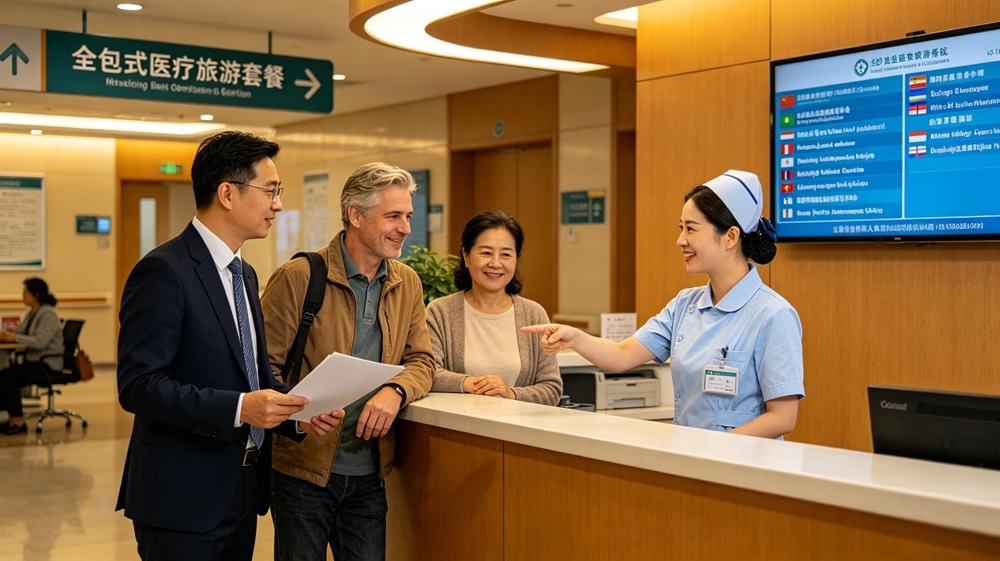
Get Your Personalized Treatment Plan Today
If you are an international patient seeking medical evaluation, customized treatment planning, cost consultation, or appointment scheduling in China, reach out to the MedChinaGuide.com professional team:
- Live Chat: Use the AI-powered chat assistant in the lower right corner of the page to get instant answers and submit your inquiry online.

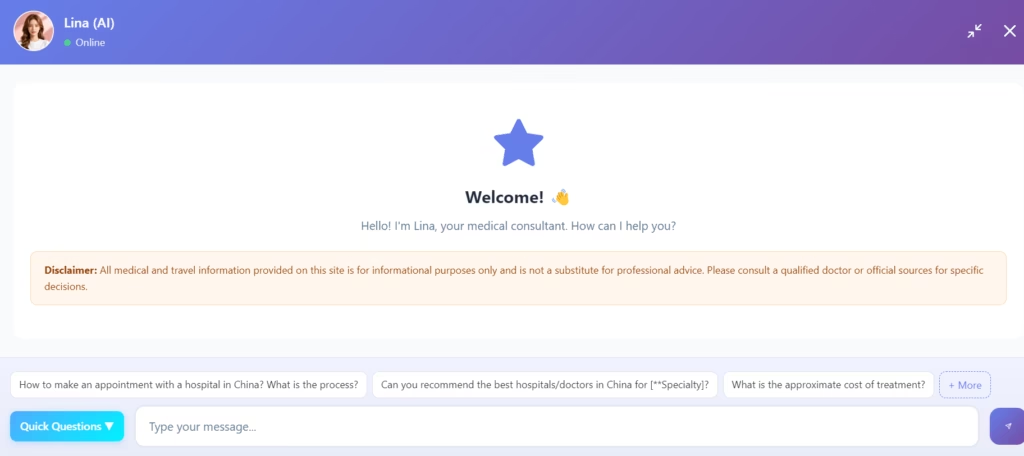
- Dedicated Service Channel: Submit your medical needs through the “Contact Us“ form on our website. Our team will provide one-on-one personalized consultation and end-to-end care coordination.
- Institutional Partnerships: For cross-border healthcare resource collaboration or business development inquiries, please submit your proposal via the “Business Cooperation“ channel on our website. We will follow up promptly.
Disclaimer:
The China-U.S. medical cost comparison data in this article represents 2026 market reference prices. Actual costs vary depending on the hospital, physician, treatment plan, and individual circumstances. The content of this article does not constitute medical advice and is not a substitute for professional consultation. International patients should independently verify hospital credentials, physician qualifications, and treatment plans before making any medical decision, and consult a qualified healthcare provider. MedChinaGuide.com assumes no liability for actions taken based on the content of this article.