

From Social Media to Hospitals: A New Trend in China Travel
Foreign travelers’ social media feeds from China once showcased mobile payments, bullet trains, and robotic room service. Recently, a new category of experiences has surged in popularity: visits to dental practices, eye clinics, and centers for Traditional Chinese Medicine. For a growing stream of visitors, these practical and immersive services represent a fresh lens through which to engage with the country—a phenomenon some dub “Living like a local, healing like a patient.”
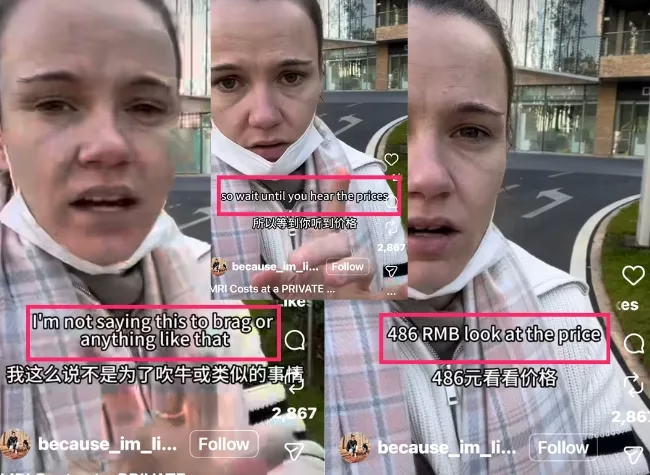
Short-video platforms are now awash with content under hashtags like #MedicalTourism, chronicling international visitors who blend tourism with treatment in China. Their travel plans increasingly feature stops at the nation’s top-tier public medical institutions, categorized as Level 3, Grade A hospitals—the pinnacle of China’s healthcare system.
The Numbers: Rapid Growth of Medical Tourism in China
Statistics indicate this movement is gaining momentum. In 2024, the city of Shenzhen recorded approximately 770,000 medical service visits from overseas patients, with around 640,000 originating from Hong Kong and Macao, as per local health authorities. The remaining patients hailed from countries including the United States, Canada, and Japan.
Official figures from Shanghai reveal that 13 designated hospitals attended to nearly 270,000 foreign patients in 2024, marking a year-on-year increase of about 15%.
Nationwide, major hospitals treated an estimated 1.28 million international patients over the past year, a surge of 73.6% compared to three years prior, according to a 2025 annual report on international medical services from China’s National Health Commission.
Why Choose China? Affordability and Efficiency
Affordability and speed are the primary drivers for foreign patients seeking care in China.
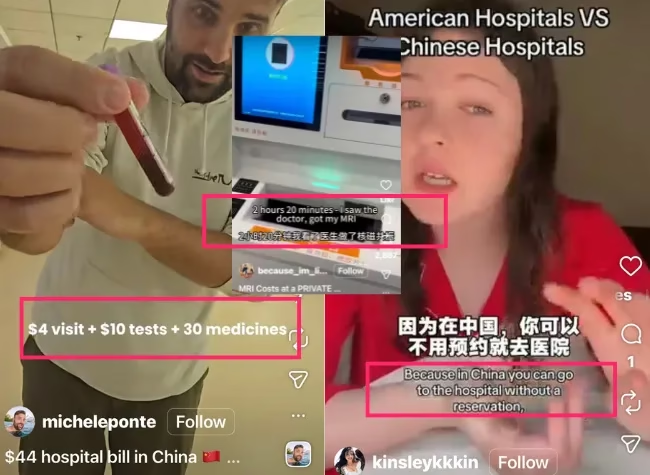
Online videos often convert Chinese medical invoices into foreign currencies, underscoring dramatic cost disparities. A standard cardiac exam priced around $75 in China stands in stark contrast to estimates of $10,000-$20,000 for uninsured patients in the U.S. Emergency care involving ambulance transport, lab work, and treatment can total under $150 in China, whereas a single ambulance ride in parts of the U.S. may cost tens of thousands.
This contrast strikes a chord with patients from nations grappling with high out-of-pocket costs or protracted wait times. Amy, a British content creator whose videos garnered significant attention, traveled to Beijing after suffering from unexplained stomach pain for nearly two years. Failing to secure a clear diagnosis or timely specialist attention at home, she sought answers in China, bracing for potentially serious news. Physicians diagnosed her with a gastric ulcer on her very first day in the capital.
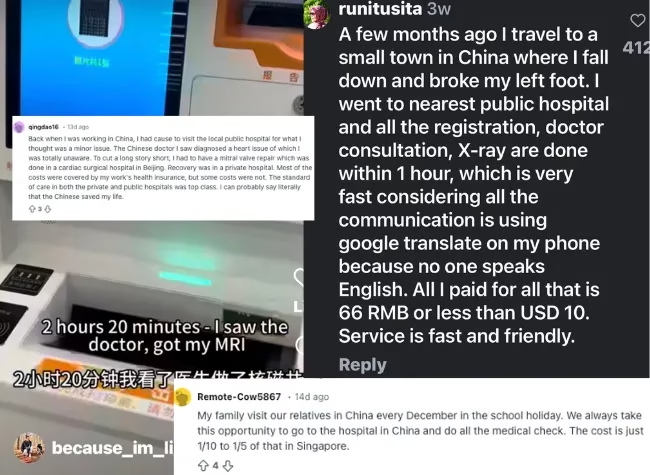
Operational efficiency is another factor repeatedly praised by international patients. While outpatient procedures and diagnostic imaging can require weeks or months of scheduling in many countries, foreign visitors in China frequently report registering, consulting a doctor, and completing multiple tests—all within a matter of hours.
Viral clips depict patients walking in without appointments, being seen by a physician within minutes, and finishing comprehensive physicals—including blood tests and imaging scans—in a single afternoon.
Dentistry, Eyes, and TCM: The New “Must-Do” List
This trend has also redefined what netizens call the new “essential trio for a China trip”: dentistry, ophthalmology, and TCM. Dental care, often not covered by insurance abroad, has become a major draw. Videos showcasing teeth cleaning for under $20 have circulated widely, inspiring some tourists to book dental appointments alongside their sightseeing itineraries.
Others opt for affordable vision tests and eyeglasses, while some integrate acupuncture, moxibustion, and pulse reading as cultural immersion activities during their travels.
How China Manages International Patient Services
Despite rising interest, Chinese health authorities note that foreign patients do not overwhelm domestic medical resources. Guided by a 2021 notice from the Beijing Municipal Health Commission, international medical services—classified as special services within public hospitals—are capped at no more than 10% of a hospital’s total service capacity.
International medical departments function independently, and foreign patients are not covered by China’s public health insurance. Fees for international patients are substantially higher than those in standard departments, often ranging from six to twelve times more for registration, and up to twelve times higher for examinations and inpatient care.
Hospital administrators regard international services as a supplementary revenue stream, not a drain on public resources.
This expansion has also generated new job opportunities, such as multilingual patient coordinators and medical companions. At Peking University Shenzhen Hospital, the international medical department has assembled a volunteer team of 86 individuals offering assistance in 15 languages.
China’s medical openness extends beyond metropolitan hubs. In southern Hainan province, the Boao Lecheng International Medical Tourism Pilot Zone permits the use of imported pharmaceuticals and medical devices not yet approved elsewhere in China, benefiting from preferential policies under the Hainan Free Trade Port. The zone covers specialties like oncology, cardiology, hematology, and ophthalmology, catering to both foreign and domestic patients with specific medical needs.
Analysts suggest the ascent of medical tourism mirrors broader global pressures on middle-income households in pursuit of accessible and prompt healthcare. For many visitors, traveling to China for treatment has evolved from an emergency recourse to a cost-effective strategy, merging healthcare with exploration in an era defined by value-conscious choices.
As Chinese hospitals continue to refine their international services, medical tourism is transitioning from a novel concept to a staple in some travelers’ plans.