Author (Video, Audio, Article): China Medical Tourism Guide
I. Summary
This chat show explores the rapidly growing medical tourism industry in China, focusing on its key advantages, potential challenges, and practical considerations for international patients. Key findings include significant cost savings (procedures priced at 1/5 to 1/3 of Western costs), advanced medical technology (e.g., AI diagnostics, robotic surgery), and efficient services with short waiting times. Top cities like Beijing, Shanghai, and Guangzhou are highlighted for specialized treatments, while traditional Chinese medicine (TCM) integration offers holistic care. However, challenges such as language barriers, varying standards across facilities, and cultural nuances are discussed, alongside tips for choosing accredited hospitals and leveraging support services. The analysis also covers market growth projections, government support, and emerging trends like cosmetic surgery and wellness tourism, providing a balanced overview for prospective patients.
II. Audio
III. Video
IV. Outline
1. Introduction
- Purpose of the Deep Dive: Analyze medical tourism in China for international patients.
- Overview of sources: Market reports, guides, and academic research.
2. Market Growth and Drivers
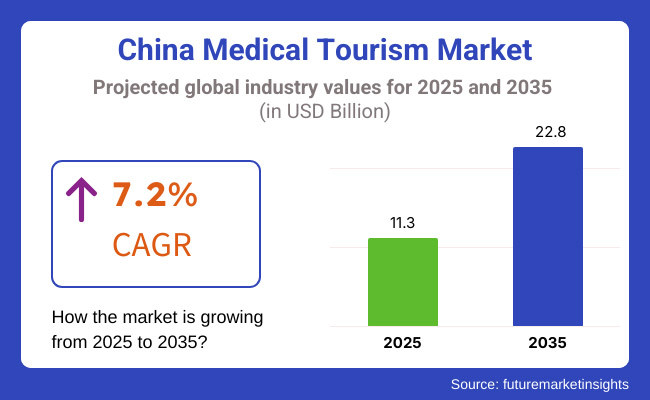
- Booming industry: From $11.3B (2025) to $22.8B (2035), 7.2% CAGR.
- Key drivers: Affordability, quality perception, government support, tech adoption.
- Regional dominance: 20% of Asia’s medical tourism market in 2024.
3. Core Advantages for International Patients
- Cost Efficiency: Prices 1/5–1/3 of Western rates (e.g., MRI, heart surgery).
- Reduced Waiting Times: VIP fast tracks, same-day appointments, AI scheduling.
- Advanced Technology: Top-ranked hospitals, AI diagnostics (95% accuracy), robotic surgery.
- TCM Integration: Holistic care combining Western medicine and traditional therapies.
4. Practical Considerations
- Support Services: Multilingual navigators, certified translators, insurance partnerships.
- Visa and Logistics: Medical visas (M visas), tech-driven processing, major hubs (Beijing, Shanghai).
5. Potential Challenges and Mitigation
- Perception and Standards: Older quality perceptions; vary between top-tier and regional facilities.
- Language/Culture: Proactive use of translators, cultural nuance awareness.
- Information and Ethics: Cross-referencing sources, JCI accreditation, privacy/consent issues.
6. Regional Hubs and Specialized Treatments
- Top Cities: Beijing (cancer), Shanghai (IVF), Guangzhou (cosmetic surgery).
- Emerging Locations: Hainan (wellness tourism), Tianjin, Chongqing.
- Suitable Treatments: Dental, eye care, TCM, short-stay procedures.
7. Future Trends and Insights
- Growth areas: Cosmetic surgery, stem cell therapy, wellness tourism.
- Dual reality: Urban-rural healthcare gaps, contrasting domestic/international patient flows.
8. Conclusion and Recommendations
- Key takeaways: Cost, tech, efficiency as main draws.
- Advice: Research accredited hospitals, use support systems, confirm post-care plans.
- Final thought: Evolving global healthcare landscape and emerging opportunities.
V. Script
Welcome back to the Deep Dive.
You’re here because you want knowledge fast and focused. We do the legwork, digging through sources so you get the core insights—exactly. And today we’re looking into something quite specific: medical treatment in China for international patients.
We’ve gone through quite a stack: there’s a China Medical Tourism Guide, market reports looking ahead, articles from medical tourism sites, and even an academic paper digging into consumer demand. Right, and our mission today is pretty straightforward: pull out the key advantages, yes, but also the potential concerns and maybe some practical tips for anyone thinking about China for medical care.
China’s Medical Tourism Advantages: Why It Attracts International Patients
Despite its rapid growth, China medical tourism still faces unique challenges that international patients need to understand before planning their journey.
Okay, let’s get into it. Where does medical tourism in China stand right now? Well, the first thing that jumps out is the growth—it’s really booming. The market trends report we saw projects going from about $11.3 billion in 2025 up to nearly $22.8 billion by 2035. Wow, that’s basically doubling in a decade. Yeah, it’s a compound annual growth rate (CAGR) of 7.2%—pretty substantial.
So, what’s fueling that? What are the main drivers? It seems to be a mix of things. Affordability is a huge one (we’ll definitely talk more about that), but also there’s a growing perception of high-quality services, advanced tech, plus just more international patients choosing China. And importantly, government support for the sector.
And China’s already a significant player in Asia, isn’t it? Oh, absolutely. For 2024, the estimate is around $10.6 billion, which is something like 20 percent of the entire Asian medical tourism market.
Okay, and who makes up that market within China? Is it mostly foreigners? Interestingly, the breakdown seems to be around 70 percent international patients coming into China, and the other 30 percent are actually domestic patients—Chinese citizens traveling within the country for specialized treatments.
Kacha, so for that 70 percent coming from abroad, where are they typically heading? The main hubs are pretty clear: Beijing is noted for its top cancer centers, Shanghai is big especially for things like IVF, and Guangzhou is getting known for cosmetic surgery.
Okay, that sets the scene. Let’s dive into the core reasons why a foreigner might actually choose China. What are the big advantages? Well, the No. 1 thing that comes up again and again is cost—it’s just significantly cheaper than many Western countries. How significant are we talking? The sources suggest procedures can range from maybe one fifth to one third of the price you’d pay in, say, the US or parts of Europe. It’s a massive difference.
Can you give us some concrete examples? Sure. The guide mentioned an MRI scan could be over $2,000 in the West, much lower in China. And appendectomy? Maybe $32,000 in the US versus closer to $1,000 there. Even something major like heart surgery—you might be looking at $10,000–$15,000 compared to $50,000+ stateside. That’s huge.
And is the pricing generally clear? Sometimes lower prices come with hidden costs. That’s a fair point, but the system in many public hospitals is government regulated, so it tends to be quite transparent. Itemized billing is common. Consultation fees, for instance, can be incredibly low—like 20 to 50 RMB (that’s just a few dollars).
Okay, and medications—also much cheaper? Reports suggest drug prices can be 70 to 90 percent lower than in the US, largely thanks to government pricing policies.
All right, so cost is clearly a massive draw. What’s another major advantage? Waiting times—or rather, the lack of long waits—is another big one. How do they manage that? Many top hospitals have dedicated international patient departments, think of them as VIP fast tracks. You often get priority access, so potentially same-day appointments in some cases.
Yes, the guide mentions getting same-day consultations at Peking Union Medical College Hospital, which is a top institution. Part of it is just the scale: some leading hospitals handle thousands of patients daily—over 5,000 visits. Wow, and technology helps too. AI is being used for scheduling, which apparently cuts waiting times by 30 or even 40 percent, according to the market report. That efficiency could be crucial for someone needing treatment quickly.
Okay, let’s talk quality. Cost and speed are great, but what about the standard of care and the tech? I think some people might still have older ideas about this. That’s a really important point, and the reality has shifted dramatically. China has poured resources into medical tech. Several Chinese hospitals are now globally ranked; the Fudan ranking for 2024 listed 12 in the top tier. So we’re talking top-level equipment.
Absolutely. In leading centers, you’ll find cutting-edge diagnostics, advanced robotic surgery systems—the same kind of tech used in top Western hospitals. And they’re really innovating with AI. How so? AI-assisted diagnostics are showing impressive results—around 95% accuracy, helping reduce misdiagnosis rates by like 30%. Think about reading complex scans: AI can spot things the human eye might miss. That’s significant.
And surgical skills also very strong in certain areas. The guide highlighted world-leading survival rates for liver transplants (93 percent at five years) and things like robotic prostate surgeries boast success rates around 99 percent.
Beyond surgery, what fields are strong? There’s a lot happening in genomics, personalized medicine based on your genes, pharmaceuticals, stem cell research, oncology, orthopedics—really across the board in specialized areas.
Now, China also has its own unique medical tradition, right? Traditional Chinese medicine (TCM). How does that fit in? That’s another distinct advantage. Many modern hospitals actually integrate Western medicine with TCM. You might get personalized treatment plans that combine both approaches, sometimes even using AI to help tailor TCM therapies. What’s the benefit of that integration? Potentially a more holistic approach and sometimes fewer side effects. The guide mentioned TCM helping reduce nausea from chemotherapy, for example, using natural ingredients.
Okay, interesting. So the medical side looks strong in many areas, but what about the practicalities? Being a patient in a foreign country can be daunting—language barriers, for example.
Definitely a valid concern, but the top-tier hospitals are very focused on this. They offer pretty comprehensive support services. Likewise, multilingual patient navigators are common, often available 24/7, speaking 15 or more languages. You might see AI kiosks for information too, and certified medical translators are key—people trained specifically for healthcare settings to ensure accuracy. One source mentioned CMTA-trained translators reducing errors by 98 percent. That level of support must make a huge difference.
What about dealing with insurance? Good question. Many top hospitals have direct billing agreements with loads of international insurance companies. The guide mentioned partnerships with over 2,000 insurers in some cases, so they can really streamline the payment process.
Okay, and getting into the country for treatment—visas. That seems to be getting easier too. China has visa-free travel arrangements with more and more countries, and they’re using tech to speed up visa processing. Plus, there are specific medical visas (M visas) designed for this purpose.
It sounds like there are quite a few compelling reasons: cost, speed, tech, support. Yeah, and we haven’t even touched much on other socio-economic pluses: generally safe environment, low cost of living for things like food and local transport, seamless mobile payment systems, easier accommodation booking, good transport networks like high-speed rail.
Okay, so a strong case, but let’s be balanced. It’s crucial to understand the potential downsides or concerns someone might have. Right, what should people be aware of?
Navigating China’s Medical Tourism Challenges: Expert Insights for Global Patients
China’s Medical Tourism stands out globally for its unbeatable combination of affordable healthcare and world-class medical expertise, especially in Shanghai’s top hospitals.
Absolutely yes—it’s not without potential challenges. One thing is historical reputation: some people might still carry older perceptions about quality or safety, even though, as we discussed, top hospitals have made huge strides and meet international standards. Understandable—old views can linger. What else?
Language and culture. Despite the support services, even with translators, navigating cultural nuances in a healthcare setting can still be a factor. The tip here is really: use those navigators and translators proactively; don’t hesitate.
What about getting reliable information beforehand from outside China? That’s a point the guide raised: potential limitations due to information censorship. It just means you need to be diligent, cross-reference information from various sources, maybe talk to medical tourism facilitators who specialize in China.
And are the standards consistent everywhere, or does it vary a lot? It definitely varies—that’s a key takeaway. Standards between a top international hospital in Shanghai and, say, a smaller regional clinic will be different. So the tip is: choose carefully. Look for internationally accredited hospitals (JCI accreditation is a big one or ISO certifications), research the specific hospital’s reputation, its affiliations, its track record for your specific condition.
Legal and ethical points must come up too. For sure: understanding informed consent processes, how patient privacy works in China. It’s important, and this is especially true for ethically sensitive treatments like stem cell therapies. Do your homework thoroughly.
And after the procedure, what about follow-up care? Crucial point. You need to clarify what postoperative care and rehabilitation options are available before you commit. Ask about discharge support, follow-up plans, communication with doctors back home.
We talked about transparent pricing being a plus, but any pitfalls there? While it’s often transparent, especially in regulated hospitals, it’s always smart to confirm all expected costs upfront, ask for that itemized bill, understand payment methods, avoid surprises.
And finally, just practical travel stuff: always check current travel advisories or restrictions before planning anything. Standard practice for any international trip, really.
Okay, that’s a good overview of potential concerns and how to mitigate them. If someone is considering China, based on our sources, where should they focus their search geographically? Beijing and Shanghai consistently come up as the top recommendations. They just have the highest concentration of world-class facilities catering to international patients, plus they’re major travel hubs.
Are there other options? Yes. Several other cities are mentioned: Tianjin, Chongqing, Guangzhou (we mentioned), Wuhan, Xi’an, even places like Haikou and Sanya in Hainan province, which is positioning itself as a health tourism zone. Each might have strengths in specific areas, so the choice depends on the specific treatment you need, the hospital’s reputation in that field, location convenience for you, and the level of language and support services they offer.
Are there certain types of treatments that are particularly well-suited for medical tourism in China, based on these advantages? The guide suggests focusing where China has that clear cost and efficiency advantage, also treatments that don’t require extremely long stays (maybe under 30 days), can be logistically simpler with visas and travel—such as things like dental work, eye care or optical services, getting vaccinations, preventive health checks, and definitely traditional Chinese medicine therapies, which are often cited as good, efficient, cost-effective options.
Interesting. We also looked at that study on what Chinese residents themselves want from health tourism. Did that offer any parallels? It did. It showed high interest—over 70 percent were interested—but maybe lower actual awareness of options. For them, the main drivers were often relaxation, getting checkups, or general healthcare. And their concerns, similar in some ways to what internationals might worry about: top concerns were the professional level and quality of the place, personal privacy, and the attitude of the staff. Main barriers were cost, lack of time, and finding reliable institutions. So quality, privacy, service—pretty universal concerns.
Exactly. They also preferred traveling with others and really valued comprehensive services: booking transport, accommodation help, translation, insurance—the whole package. The analysis of their feedback really emphasized needing better “propaganda”—meaning marketing and awareness—along with good service and fair price.
One source mentioned this idea of “a tale of two worlds” in Chinese healthcare. What was that about? Ah, yes. That piece highlighted the significant gap that can exist between the advanced, well-funded hospitals in major cities and the resources available in poorer, more rural regions. It’s a complex picture.
How so? Well, it means some Chinese citizens might actually travel abroad for certain cutting-edge treatments not easily accessible everywhere domestically, while at the same time, those highly developed urban centers are attracting waves of international patients—a real contrast.
So, looking ahead, what areas are seeing particular growth? Cosmetic surgery seems to be a leading segment. There’s ongoing buzz around stem cell therapy advancements (although careful research is vital there), and generally, wellness tourism—combining health checks or treatments with relaxation and travel—it’s also growing.
Okay, let’s try to wrap this up.
If you had to summarize the key advantages for someone considering medical treatment in China, what would they be? I'd say the big three are: potential for major cost savings, access to advanced technology in top-tier hospitals, and often much shorter waiting times. Plus the unique option of integrating traditional Chinese medicine.
And the most crucial piece of advice? Be informed, be aware of the potential hurdles like language or varying standards. Do your homework, choose accredited institutions, research thoroughly, and absolutely make use of the support systems like navigators and translators that are available. Preparation is key.
Right: preparation and realistic expectations. Okay, that brings us nearly to the end. But here’s something to leave you with: as China’s medical tourism sector keeps growing so rapidly and as global healthcare connections deepen, what new possibilities and maybe new challenges will emerge for patients, for providers, for the whole global health picture? Definitely something to think about.
Thanks for joining us on the Deep Dive.
These expert insights are designed to help global patients maximize the benefits and overcome the hurdles of China medical tourism, ensuring a smooth healthcare journey.
Additional Resources:
Why Choose China for Medical Tourism Destination for international medical seekers?
What Types of Diseases Are Suitable for Treatment in China for international patients?