
Date: May 24, 2024
Subject: An Overview of the Current Status, Trends, Driving Factors, and Consumer Needs of China’s Medical Tourism Market
Author: China Medical Tourism Guide
Medical Tourism China is experiencing unprecedented growth in 2025, driven by a unique combination of affordable world-class healthcare, cutting-edge medical technology, and diverse treatment options—from cosmetic surgery to traditional Chinese medicine. This comprehensive overview breaks down the current market status, emerging trends, and core driving factors shaping the future of medical travel to China for global patients.

Summary:
This document provides a brief analysis of China’s medical tourism market based on multiple sources available online. The information indicates that China is actively developing medical tourism to attract patients from both domestic and international markets. Despite some challenges, the medical tourism industry in China is booming, driven by its advantages in medical technology, cost-effectiveness, specific treatment fields, and government support. It is expected to achieve significant growth over the next decade. Meanwhile, consumer needs and preferences are also shaping the development direction of this emerging market.
Key Insights
- Explosive Market Growth
- Demand surges for affordable care (e.g., procedures cost 80% less than in the U.S.) and cutting-edge treatments (e.g., stem cell therapies).
- Government investments in healthcare infrastructure and policies (e.g., M-visas, Hainan’s experimental treatment zone) accelerate expansion.
- Competitive Advantages
- Cost & Quality: Cardiac surgery (15Kvs.50K+ in U.S.), AI diagnostics (95% accuracy), and robotic surgery (99% success rates).
- Hybrid Medicine: Integration of TCM with Western tech (e.g., reduced chemo side effects).
- Top Destinations & Specialties
- Beijing/Shanghai: Elite cancer/IVF centers.
- Guangzhou: Cosmetic surgery hub (30% market share by 2025).
- Hainan: Global pilot zone for unapproved therapies.
- Barriers & Consumer Concerns
- High costs (16.3%), time constraints (13.5%), and trust gaps (12.6%) limit domestic adoption.
- Patients prioritize clinical expertise, privacy, and service attitude.
- Future Outlook
- Tech-Driven: AI diagnostics and personalized medicine.
- Branding: Promote “China Medical Excellence” via TCM and wellness tourism.
Actionable Steps
- For patients: Target cities by specialty (e.g., IVF in Shanghai).
- For providers: Enhance bilingual services and cross-border insurance partnerships.
- For policymakers: Standardize health tourism branding and streamline visas.
Main Topics and Key Points:
Medical Tourism China Market Status: Key Data & Patient Demographics
1. Significant Growth and Future Potential of China’s Medical Tourism Market
- Industry analysts predict that China’s medical tourism industry is booming. Breakthroughs in Parkinson’s treatments help explain this trend, as noted in the article “China’s medical tourism industry is booming. Breakthroughs in Parkinson’s treatments help explain” (Inside China Business).
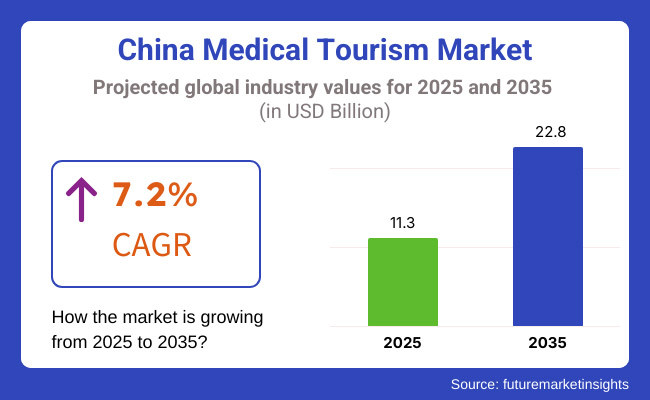
- The report “China Medical Tourism Market Trends & Forecast 2025 to 2035” projects that the size of China’s medical tourism industry will grow from USD 11.3 billion in 2025 to USD 22.8 billion by 2035, with a compound annual growth rate (CAGR) of 7.2% during the forecast period.
Driving Factors Behind Medical Tourism China’s Rapid Growth
This growth is driven by a rising demand for affordable and high-quality medical services, advancements in technology, an increasing number of international patients seeking treatments, and a strategic push by the Chinese government to enhance healthcare infrastructure.
- “Medical Tourism Opportunities in Chinese Healthcare Market” also emphasizes that China’s healthcare market is a sector that “savvy investors should be watching.
For international patients, Medical Tourism China stands out for its balance of cost-effectiveness and clinical excellence, a key factor in its rising global popularity.
2. Core Attractions of China’s Medical Tourism
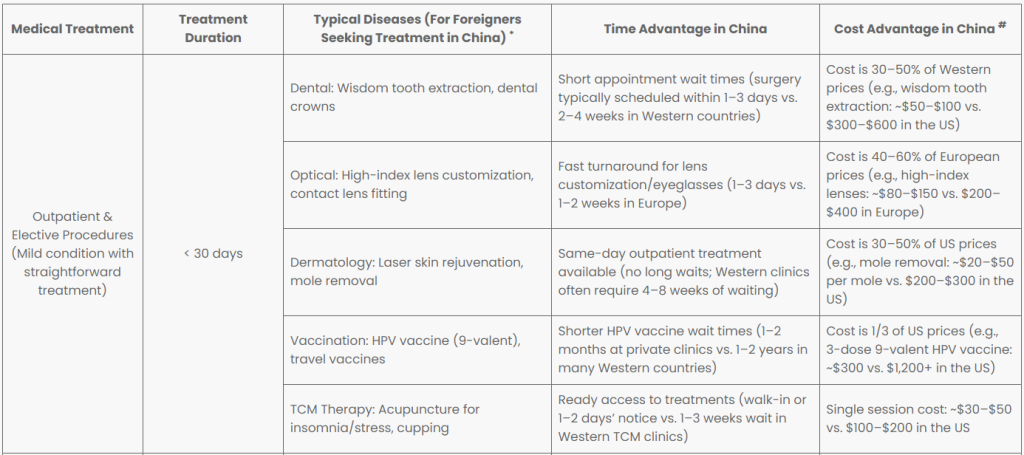
- “Why China for Medical Tourism?” highlights that the cost of medical treatments in China can be even 80 percent less than the same procedures in the USA.
- “China | Medical Tourism” notes that China attracts patients with its “unique blend of traditional Chinese medicine and cutting-edge medical technology.”
- “China’s medical tourism industry is booming. Breakthroughs in Parkinson’s treatments help explain” emphasizes that “the most modern technology is here.”
- Medical cost comparison tables also confirm China’s price advantage in various treatment programs.
3. China Becoming a Leader in Specific Treatment Fields
- “Shanghai to ramp up support for cutting-edge biomedical tech” mentioned “Shanghai will strengthen efforts to develop cutting-edge biomedical technologies, such as gene and cell therapies, mRNA, synthetic biology and regenerative medicine”
- “China’s medical tourism industry is booming. Breakthroughs in Parkinson’s treatments help explain” details China’s breakthroughs in Parkinson’s disease treatment, including nanoparticle technology and stem cell therapy. It also notes that Hainan Island is planning to become “one giant pilot zone for experimental medical treatments open to all the world’s drug companies and medical device manufacturers.” This means patients can gain access to drugs and treatments that are still years away from approval in the United States or Europe.
- Cosmetic treatments dominate the market share, expected to reach 30 percent by 2025, driven by the “increasing worldwide interest in beauty, wellness, and self-esteem.” Guangzhou and Shanghai are key cities in this field.
Emerging trends in Medical Tourism China include a growing focus on personalized care and integrated TCM treatments for chronic conditions.
4. Specific Cities and Regions Developing into Major Medical Tourism Destinations
- “9 Best Medical Tourism Destinations in China” lists nine major medical tourism destinations, including Beijing, Shanghai, Tianjin, Chongqing, and Guangzhou.
- “How to Choose the Right Medical Destination for Me?” clearly states that “Beijing and Shanghai offer China’s top-tier healthcare and tourism resources, making them the primary recommendations for medical travelers.”
- Shenzhen, due to its proximity to Hong Kong, is becoming “a key destination for cosmetic surgery and medical tourism.”
- Hainan Island is seen as an important development area for China’s future medical tourism, especially in experimental treatments.
- Hangzhou is renowned for “traditional Chinese medicine (TCM) and wellness treatments.”
5. Government Support and Policy Promotion as Key Drivers
- “China Medical Tourism Market Trends & Forecast 2025 to 2035” mentions that the government’s strategic push for medical infrastructure is one of the driving forces behind market growth.
- “Understanding the Reality of China’s Health Tourism and Consumer Demand From the Perspective of Consumers: A Cross-Sectional Study” points out that “to survive in the continuously competitive world of the health tourism market, the Chinese government has introduced a number of promotion policies to regulate the domestic health tourism industry.” It also mentions policies such as the “Standard of National Health-promotion Tourism Demonstration Base” released by the National Tourism Administration. A 2017 document is cited, emphasizing the positive role of health tourism in optimizing medical resource allocation, stabilizing economic growth, and ensuring people’s livelihoods, and proposing that “by 2030, a relatively complete health tourism service system will be basically established and the capacity will be greatly improved.”
6. China’s Safe Environment as an Attraction for Medical Tourists
- “China is one of the safest countries in the world” cites the World Travel Index ranking, noting that “China ranks among the safest countries globally.” The article highlights China’s achievements in maintaining social stability and public safety, as well as its “efficient law enforcement system that effectively combats crime.”
- “Why China for Medical Tourism?” also mentions that Beijing is “probably one of the safest cities of comparable size anywhere in the world.”
7. Low Domestic Health Tourism Penetration Rate with Key Barriers
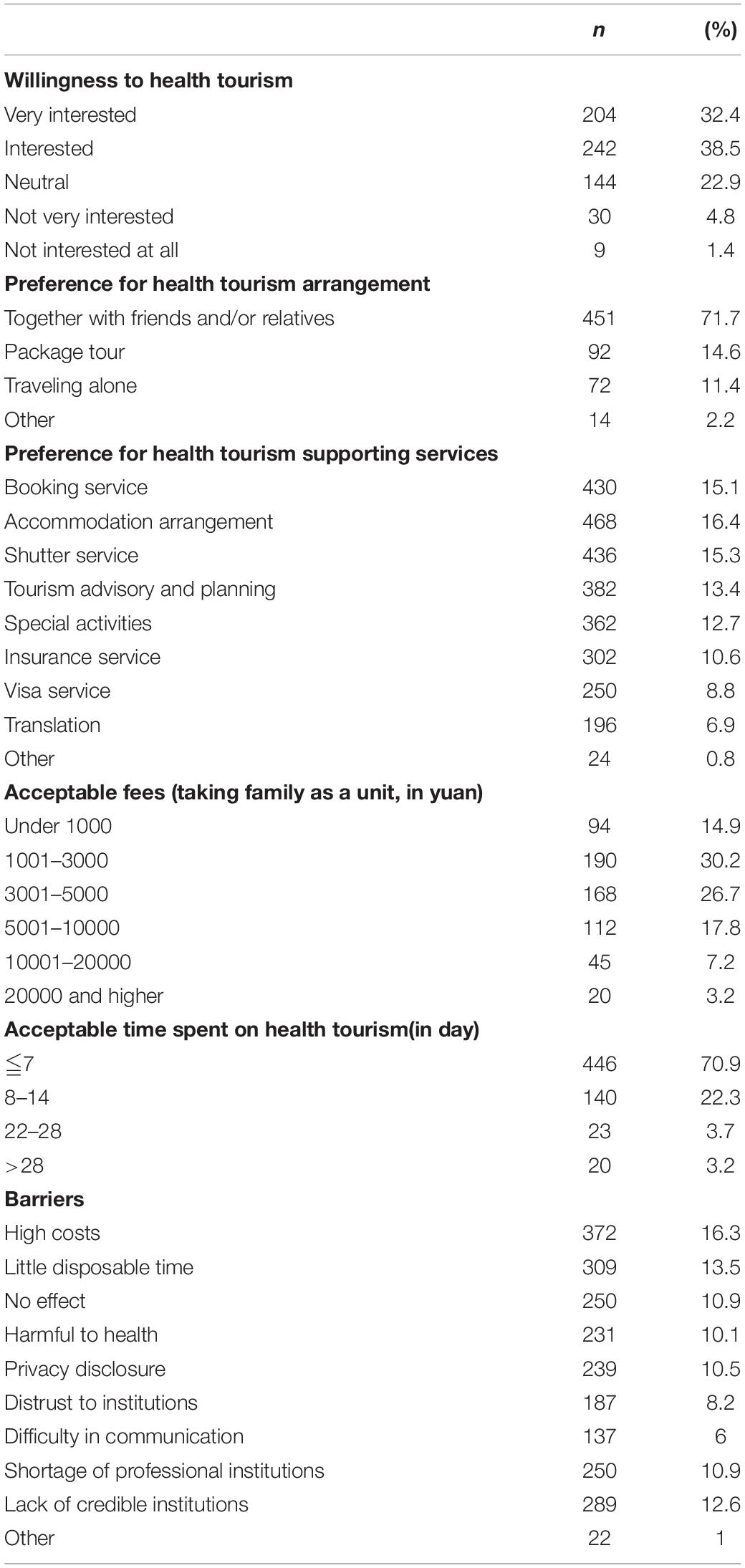
The survey results from “Understanding the Reality of China’s Health Tourism and Consumer Demand From the Perspective of Consumers: A Cross-Sectional Study” show that out of 387 respondents, 61.53 percent were aware of health tourism, but only 37.2 percent had experienced it.
The study identifies “high costs (16.3%), little disposable time (13.5%), and lack of reliable professional institutions (12.6%)” as the main potential barriers for consumers.
8. Consumer Concerns in Choosing Health Tourism Destinations
The survey from “Understanding the Reality of China’s Health Tourism and Consumer Demand From the Perspective of Consumers: A Cross-Sectional Study” indicates that “the professional level and quality of the institution were the first concern, followed by personal privacy and the attitude of service personnel.”
9. Practical Issues for Medical Tourists
- “China | Medical Tourism” provides information on medical visas (M-visas), including application requirements, necessary documents, and the application process.
- The article also addresses language issues, noting that while Mandarin is the official language, English is increasingly important in international interactions, and many hospitals offer bilingual services. “Why Are Foreign Patients Flocking to Shanghai, China for Medical Treatment?” mentions that hospitals in Shanghai provide “bilingual services and support a variety of payment options.”
- “China | Medical Tourism” emphasizes that China’s “robust public transport system” makes travel convenient.
10. Market Segmentation of China’s Medical Tourism
“China Medical Tourism Market Trends & Forecast 2025 to 2035” details various segmentation dimensions for market analysis.
Cosmetic treatments, dental treatments, cardiovascular treatments, orthopedic treatments, infertility treatments, and ophthalmic treatments are the main types of treatments.
11. Outbound Medical Tourism from China
- “Medical Tourism Opportunities in Chinese Healthcare Market” points out that the primary outbound destinations for Chinese medical tourists are the United States, Japan, and Germany.
- “Medical Tourism in China: A Tale of Two Worlds” also mentions that many Chinese people choose Asian destinations such as South Korea, Japan, and Thailand, as well as the United States for medical tourism.
- Cost factors influence the outbound choices of Chinese patients, with many opting for jurisdictions with lower costs.
12. Future Development Recommendations
The word frequency analysis from “Understanding the Reality of China’s Health Tourism and Consumer Demand From the Perspective of Consumers: A Cross-Sectional Study” shows that “propaganda,” “service,” and “price” are the main suggestions from respondents. The article recommends adopting “more diverse propaganda measures,” with government policies and legal documents following up to emphasize the promotion of health tourism products, supporting measures, and brand building.
It suggests that travel agencies or commercial insurance institutions should launch “various and targeted health tourism routes” in collaboration with authoritative medical institutions.
The importance of “brand and specialty” in development is emphasized, and it is suggested to create “a Chinese brand, taking traditional Chinese medicine as an example.”
As infrastructure and international services improve, Medical Tourism China is poised to become a top global destination for medical travel in the next five years.
Conclusion:
China is poised to become a leader in medical tourism, leveraging cost, innovation, and safety (ranked among the world’s safest countries). To sustain growth, stakeholders must address affordability, reliability, and tailored marketing—particularly for international patients seeking niche treatments. Cities like Beijing, Shanghai, and Hainan offer compelling value, while outbound medical tourism to the U.S./Asia presents parallel opportunities.
Key Citations:
7.“Beijing and Shanghai offer China’s top-tier healthcare & tourism resources, making them the primary recommendations for medical travelers.” (“China Medical Tourism Guide”)
8.“Known for a unique blend of traditional Chinese medicine and cutting-edge medical technology, China attracts patients from around the world seeking a variety of treatments.” (“China | Medical Tourism”)
9.“China offers specific medical visas, known as ‘M-visas,’ for individuals seeking medical treatment.” (“China | Medical Tourism”)
10.“The cost of medical treatments in China can be even 80 percent less than the same procedures in the USA.” (“MedicalTourism.Review”)
11.“Cosmetic procedures are fast becoming the dominant industry in China’s medical tourism sector, with a forecasted 30% market share by 2025.” (China Medical Tourism Market Trends & Forecast 2025 to 2035)
12.“High costs (16.3%), little disposable time (13.5%), and lack of reliable professional institutions (12.6%) were the main potential barriers for consumers.” (“Understanding the Reality of China’s Health Tourism and Consumer Demand From the Perspective of Consumers: A Cross-Sectional Study”)
13.“professional level and quality of the institution was the first concern, followed by personal privacy, and service personnel’s attitude.” (“Understanding the Reality of China’s Health Tourism and Consumer Demand From the Perspective of Consumers: A Cross-Sectional Study”)
14.“Propaganda” was proposed most frequently by participants, followed by “service” and “price”. (“Understanding the Reality of China’s Health Tourism and Consumer Demand From the Perspective of Consumers: A Cross-Sectional Study”)