
Last year’s visa-free policy led to a “surge” in the number of foreigners entering China, with a 112.3% year-on-year increase in national inbound visitors in 2024. Among them, Shanghai saw an 84% increase in international tourists, with popular areas like Xintiandi, the Bund, and Wukang Road having such a high “Korean presence” that it once gave locals the illusion of being in Seoul’s Myeongdong.
Among the “foreign travellerrs” in Shanghai, there’s a particularly interesting phenomenon: many are taking advantage of the visa-free policy to specifically seek medical treatment in Shanghai. This includes a significant number of native foreigners from developed countries like Germany, Italy, the UK, and the US, many of whom document their medical experiences through vlogs.
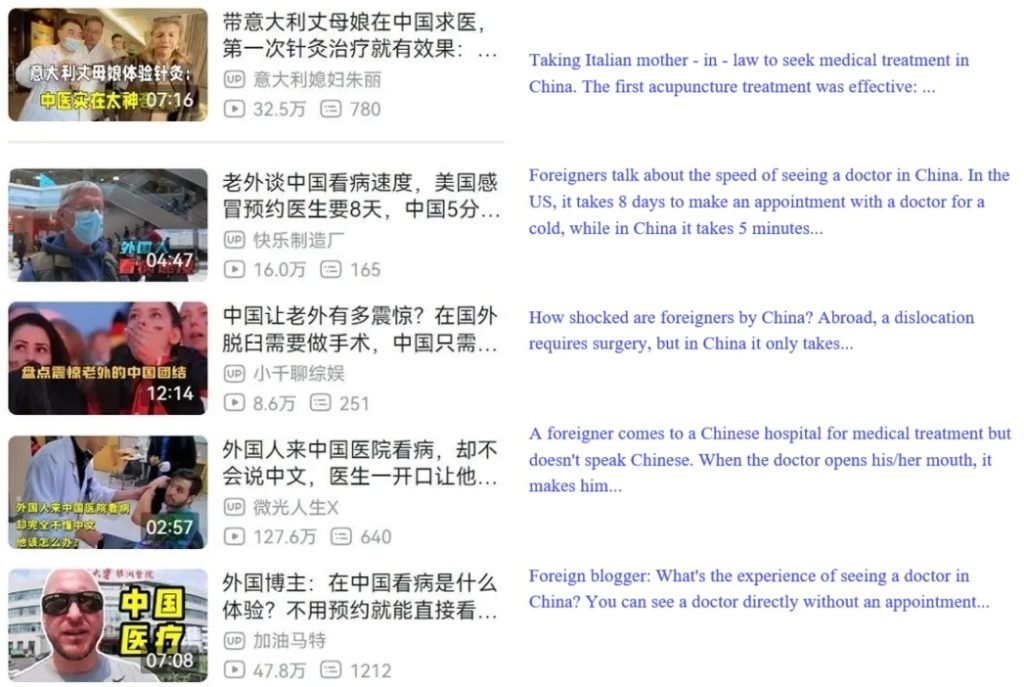
In the minds of Chinese people, seeking medical treatment abroad has long been seen as a luxury only the wealthy can afford. So, when did Chinese healthcare become such a hot commodity in the eyes of foreigners? What are the reasons? Let’s ask Deepseek, the hottest AI right now.
1. High-Quality Medical Services
– Advanced Medical Technology: Some Chinese hospitals, such as Peking Union Medical College Hospital and Shanghai Ruijin Hospital, enjoy international reputations and are equipped with state-of-the-art medical technology.
– Professional Medical Pro Teams: Many Chinese doctors have received international training and possess extensive clinical experience and expertise.
– JCI-Accredited Hospitals: Quite a few hospitals in China have been accredited by the Joint Commission International (JCI), meeting global medical standards.
– International Collaboration: Many Chinese hospitals collaborate with renowned international medical institutions, offering globalized medical services.
2. Relatively Low Medical Costs
– Cost-Effectiveness: Compared to developed countries like those in Europe and the US, medical costs in China are lower, especially for general consultations, surgeries, and hospitalization.
– Transparent Pricing: Many hospitals provide clear cost breakdowns, allowing foreigners to understand treatment expenses in advance.
3. Diverse Medical Services
– Specialized Hospitals: China boasts high-level specialized hospitals in fields like oncology, cardiovascular diseases, ophthalmology, and dentistry.
– Personalized Services: Many hospitals offer customized treatment plans and full accompanying services for international patients.
4. Traditional Chinese Medicine (TCM) Features
– TCM Treatments: Traditional Chinese medicine, including acupuncture, massage, and herbal medicine, has unique advantages in managing chronic diseases, pain, and rehabilitation, attracting many foreigners.
– Integrated Chinese-Western Medicine: Many hospitals in China offer integrated treatments, providing patients with more options.
5. Fast Access to Medical Care
– Reduced Waiting Time: Compared to the long waiting time in some countries’ healthcare systems, certain Chinese hospitals can offer quick appointments and consultations for international patients.
– Efficient Processes: The medical process in Chinese hospitals is generally efficient, allowing for rapid completion of examinations, diagnoses, and treatments.
6. Specialized Treatment Needs
– Rare Disease Treatments: China has accumulated rich experience in treating rare and complex diseases.
– Stem Cell and Gene Therapy: China’s research and application of cutting-edge medical technologies, such as stem cell and gene therapy, attract more and more foreign patients.
7. Cultural and Language Support
– Multilingual Services: International departments in some large hospitals and foreign-funded hospitals offer services in English, French, Japanese, Korean, and other languages, facilitating communication for foreign patients.
– Cultural Adaptation: Chinese hospitals are increasingly focusing on providing culturally adapted services, such as catering to dietary and religious needs.
8. Convenient Visa Policies
– Medical Visas: China offers specialized medical vias for foreigners seeking treatment, making it easier for patients and their families to enter the country.
– Simplified Procedures: Some hospitals provide international patient services, assisting with visa applications, doctor appointments, and accommodation arrangements.
Differences in Medical Experiences Between China and Abroad
Before embarking on a medical journey in China, it’s essential to understand the differences between China’s and overseas healthcare systems.
In China, medical institutions are divided into public and private hospitals:
– Public Hospitals: Operated by the government or state-owned enterprises, they dominate the healthcare system. They are categorized into primary and secondary hospitals (similar to community clinics and small-city hospitals abroad),and tertiary-A hospitals, which offer high-level specialized services and are typically located in major cities or provincial capitals.
– Many large cities’ tertiary-A hospitals have both general and international departments. The former serves all patients, while the latter caters to foreigners and high-end clients, offering better experiences at higher costs.
– Private Hospitals: Such as foreign-funded hospitals and international medical centers, they offer better environments, superior experiences, multilingual services, and convenient appointments, but at higher costs.
The most significant difference between China and other countries is the absence of a “first-visit” system. In countries like the US, UK, and Japan, residents must first consult their registered general practitioner or family doctor, who then determines if a referral to a hospital or specialist is needed. In emergencies, patients can go directly to the ER. However, in China, patients can freely choose where to seek treatment, whether at community hospitals or directly at tertiary-A hospitals, without restrictions. This makes accessing high-quality medical resources in China highly convenient.
In terms of appointments and waiting time, while China widely uses appointment systems, due to the large population, securing an appointment with a renowned specialist in a top-tier hospital can be challenging, often requiring long waits. However, outpatient registrations in China are valid for 24 hours, and patients can usually see a doctor and complete tests on the same day. In contrast, many foreign countries enforce strict appointment systems, with non-emergency cases sometimes waiting weeks or even months for treatment.
In terms of service experiences, Chinese doctors often have shorter consultation times due to the high volume of patients. However, the development of private medical institutions in recent years has improved overall service quality. Overseas hospitals typically emphasize personalized care and patient privacy, with longer doctor-patient communication times.
In terms of costs, basic medical services in China are affordable. However, for major illnesses or specialized treatments, costs can be high without sufficient insurance coverage. In countries like the US, medical expenses are generally exorbitant, and insurance is essential to mitigate personal financial burdens. For example, the average cost of an appendectomy in China is around RMB 10,000, while in the US, it’s approximately $30,000 (about RMB 220,000).
As patients’ demands for health and wellness increase, coupled with convenient transportation and cost advantages, medical tourism to China may become a new trend. As China’s most international metropolis, Shanghai selected 13 public hospitals in 2023 to pilot international medical services. Data shows that in the first half of 2024, the number of foreign patients served by Shanghai’s medical institutions increased by 24.30% year-on-year. Earlier this year, the Shanghai Municipal Government released the “Implementation Opinions on Promoting the Innovative Development of International Medical Services in Shanghai,” indicating that seeking medical treatment in China will become even more convenient for foreigners in the future.
This article is reposted from the Internet and has been edited for clarity.
